Weeknote: 11 November 2026 – Steam Decks, mobile phone bans, performative government policy, freedom of movement and a new comic

At this rate, I shall have to rename this column ‘midweek note’. But anyway…

Sort-of Steam Decks

What’s better than a Steam Deck? Several Steam Decks! Which is (sort of) what I ended up with by transforming every Android device within arm’s reach into a mobile PC gaming gadget by way of the fab DroidDeck. Read my increasingly unhinged writeup here.

Smartphone bans aren’t a good thing. The UK government is set to ban kids from even having phones in their bags, under new legislation that is simultaneously technically illiterate and deeply stupid. I wrote about the ban for this very blog and also reheated a piece for Stuff I wrote back in January about the subject.

Also (mostly) stupid: the new UK porn ban. As 404 Media reports, it’s now illegal in the UK to possess strangulation or suffocation porn, as well as some types of ‘close familial relatives’ roleplay. This follows a broader UK porn crackdown that placed countless sites behind age gates.

You might be in favour of all this, but there are several major intertwined issues. First, this policy originates from conservative (small c) politicians, who’ve expressed negative views even on vanilla consensual acts. Secondly, the government knows full well few will leap up to defend porn in any shape or form.

But the bigger issue is how widely this latest amendment has been drawn. I’m unsure whether this is due to incompetence or intent, but the net result is to create a ‘trap’ for anyone who watches porn, because something might be mislabelled. At that point, they are potentially fucked.

There are, of course, positive arguments for such legislation, in that pornography essentially normalises acts that can be dangerous or problematic. Consent is a problem among many age groups. But the lack of specificity in legislation and honesty in discourse is performatively absurd.

It should not be beyond legislators to be much more precise when it comes to targeting issues, rather than casting a wide net and figuring out whether someone has ‘done a crime’ later. Moreover, this again points to feature creep we’ve seen from UK governments before regarding the internet.

So, yes, there is a lot of horrible shit online. Yes, we need to educate children and adults alike about potential harms. But this isn’t the way.

Kudos to New Statesman political editor Rachel Cunliffe for fighting the good fight on Bluesky, noting that the even lawyers can’t unpick this law. That’s presumably the point. Be as broad as possible with legislation and you retain the widest possible scope to do whatever you like with it in the future. Which all whiffs a bit of Judge Cal.

Apple’s PROLED MacBook Pro is making people dizzy, writes Mike Wuerthele for Apple Insider. This is tangentially related to the motion issues I first wrote about back in 2013. In short, some people are more sensitive than others to screen animations and flickering. OLEDs do the latter, effectively blasting a strobe at your retinas.

The issue is complex. Movements and frequencies that affect one person won’t necessarily affect another. I can’t stomach iOS animations but I’m fine on rollercoasters. Similarly, my Retroid Pocket 6 OLED doesn’t cause me problems, but the one in my iPhone 16 Pro does. If nothing else, all this makes me quite happy that the M6 iMac has an LED. I’d have loved a 120Hz display, but not if I couldn’t use the thing.

Whether Apple does – or can do – anything about its new MacBook is another matter. The company deserves credit for the way it responded to motion issues (albeit not for how it’s so often reactive rather than proactive during OS updates); but PWM (pulse-width modulation) baked deep into its displays is more about hardware than software. On iPhone, there’s a switch to ‘soften’ PWM at lower brightnesses, but my understanding is it doesn’t disable it entirely. Regardless, there’s no off switch at higher brightness settings and nothing at all on the new MacBook Tappity Tap Pro. Buyer beware, etc.

Brexit remains a disaster. Labour is finally recognising that and doing something about it. But good grief at the cynicism. On Monday, Chris Ward, who wrote the party’s manifesto red lines now says it’s time to scrap them. I mean, yes. But by the same token, we’re only two years on from the general election. Those red lines made no sense two years ago. The entire exercise reeks of cynicism, opportunism and populism. “We had to say one thing to win, but now we’re saying what we really mean!” It also resulted in us wasting two entire years tiptoeing around the issue rather than figuring out how to return to the EU.

Freedom of movement is a good thing. Unsurprisingly, it turns out the public agrees. Well, except Reform voters. But even more Tories are on board than not. Perhaps, finally, the UK will stop conflating every type of people mobility and understand the huge benefits of a reciprocal deal that makes it almost as easy to move between London and Madrid to live and work as it is to go from London to Glasgow. But, somehow, I doubt it.

Terran Omega is in print. PJ Holden’s Eisner-nominated solo work has had a very limited run. If you want one of the hundred copies of the first two issues, don’t hang about.
November 11, 2026. Read more in: Weeknotes

No Comments

England set to ban children from having smartphones on their person at school, showcasing yet more tech illiteracy from the UK government

I’m so sick of tech illiteracy and ignorance at the heart of government. It makes no odds who’s in charge. All politicians run around screaming “THINK OF THE CHILDREN!” to, ironically, satisfy perennially online older people talking bollocks on Facebook and Mumsnet.

That’s not to say there aren’t problems when it comes to tech and children. The internet in particular presents major challenges. But shielding kids from so much and creating a cliff-edge at 18 won’t help. Nor will removing mobiles fix attention issues or deal with bullying.

As per the BBC, the latest wheeze in England is to ban kids at school in England from even having a phone in their possession. But so much of modern life requires a smartphone. What are children who use one for access to public transport supposed to do?

There are other practical reasons to have a device too. My youngling’s school had to evacuate after a major gas leak. Kids having phones helped coordinate with parents rather than the school being swamped with such efforts. The government would suggest you buy a brick phone, but that adds cost and assumes people have the means. It adds to e-waste. It’s another thing to take care of.

Access to phones “risks pulling children away from their learning and from each other”, the government said. How? If there’s an on-campus usage ban, which most schools already implement, how are children being pulled away from learning? One response was that kids are “still TikToking in the toilets”, to which I’d say citation required. And kids still need a device anyway, because homework and other communications now come via apps. Parents therefore often provide kids with one piece of tech that can do everything. Such efforts will now be undermined.

I fear a slippery slope. Sooner or later, the UK government will push for a full ban on smartphones for the under-18s. Then everyone will act all shocked when there are problems with buses and trains, a bunch of teachers start having issues with the physical searches that are being mooted, and kids end up in a worse spot than they were before.

If we really do want to think of the children, how about choosing education over eradication when it comes to technology?

November 10, 2026. Read more in: Opinions, Politics

1 Comment

Weeknote: 5 November 2026 – Boox, Liquid Glass, MacBook Pro and new games

Boox

Argh. Even later. Sorry (again). Anyway…

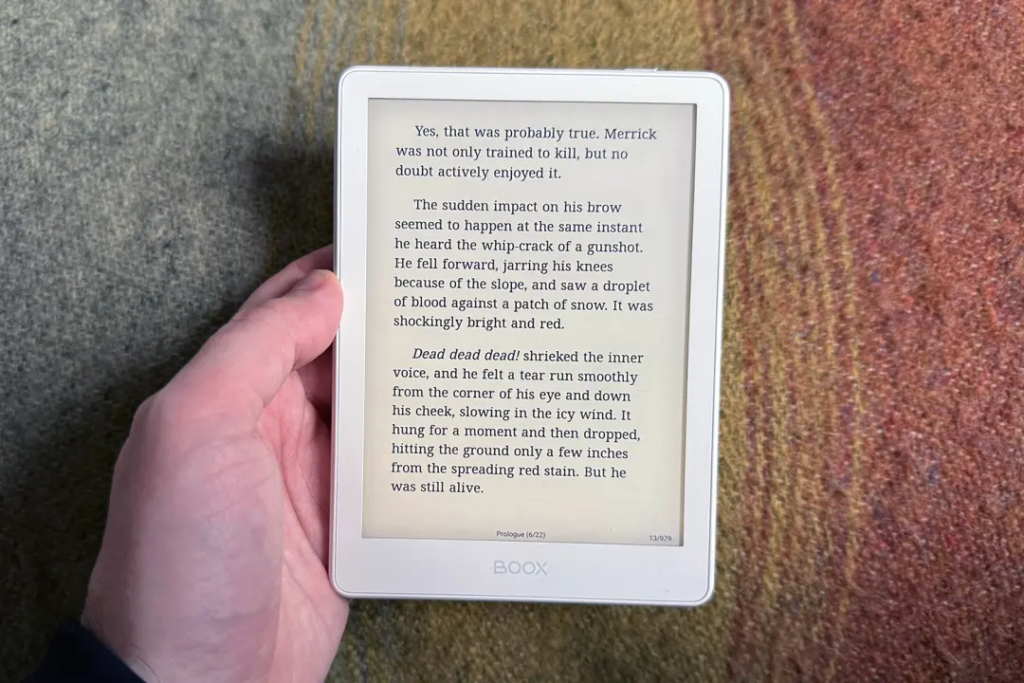
Another screen solved my screen problem. Said problem being faffing rather than reading more. (Specifically, my ever-growing read-later pile and more fiction.) I’d planned a piece about Naomi Alderman’s Couch to 5K for reading but, entertainingly, got distracted. But I resolved to do… something. In the end, I did some research about e-readers, quickly decided Jeff Bezos could go do one, got a Boox Go 6 (Gen II) in instead, and spent a couple of happy months with it before writing a piece for Stuff: I needed to fix my iPhone-addled brain and it turns out the answer was another screen.

I no longer hate Liquid Glass. In fact, I don’t hate Liquid Glass to the extent I’ve turned off legibility-oriented accessibility aids on Mac and iPad. (I still use them on iPhone on a per-app basis.) Much of this change aligns with a major overhaul to iOS for the iPhone Duo. Over at Wired, my take on this is that Liquid Glass Finally Makes Sense on the iPhone Duo – but it also makes more sense everywhere now. (Not that it doesn’t still need work, mind.)

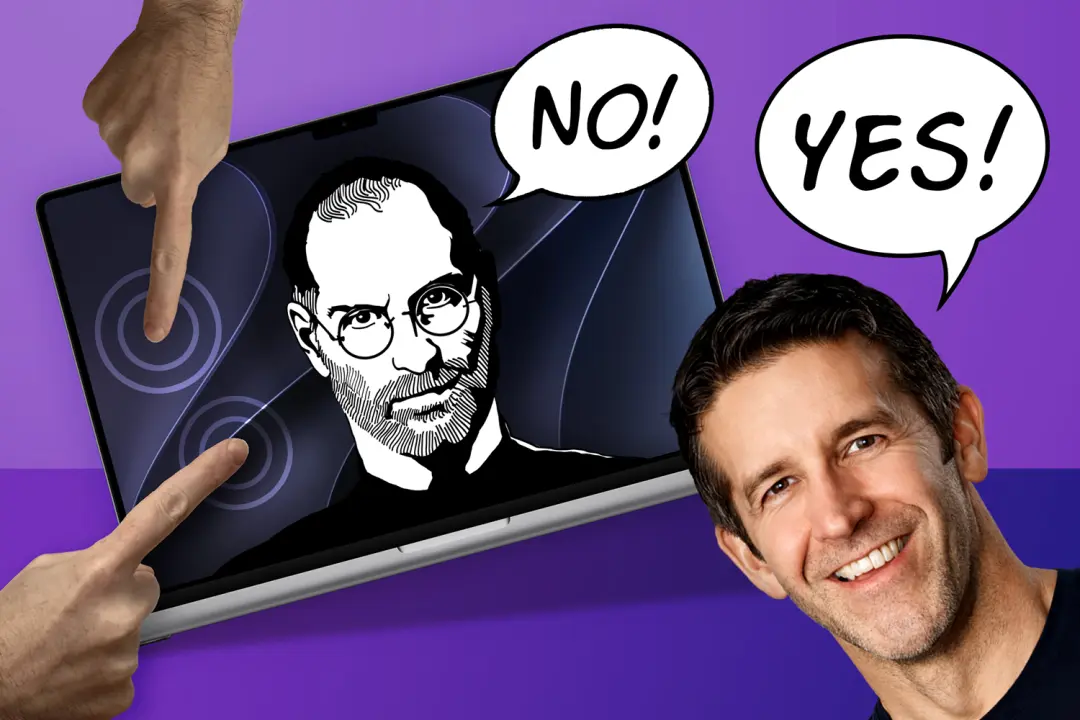
I don’t think Apple’s touchscreen Mac goes far enough.I wrote about how Apple’s touchscreen MacBook Pro didn’t contradict previous arguments Apple had made about similar devices. (As in, interacting with vertical screens is bad because it kills your arm.) Hilariously, Apple then showed an animation of someone reaching over the new Mac’s keyboard to play a synth on the touchscreen. Er, no. So much no. However, it’s good that users of this device have more choice when it comes to interaction, even if I doubt they’ll use it much. Read all about that in my column: Apple’s touchscreen MacBook Pro is finally here, but I’d sooner have a MacBook that turns into an iPad. Also, MacBook Tappity Tap Pro was right there, Apple.

Faraway is no longer faraway. That’s because Eliss creator Steph Thirion’s long-awaited follow-up was released today. And I do mean long-awaited – he first announced it 16 years ago.

Qwak is reborn. The original Qwak is even older, starting out on the BBC Micro in 1989, before finding its way to a range of other systems. A new version has now arrived on Steam, and it’s very good. Buy it!

November 5, 2026. Read more in: Weeknotes

No Comments

Weeknote: 28 October 2026 – MacBook Tappity Tap Pro, iPhone Duo problems, iPhone Duo apps and Apple copying and pasting the iMac

MacBook Touch

Argh! Very late! Sorry. Anyway…

Apple’s touchscreen MacBook is imminent. I wrote for Stuff about why the MacBook Tappity Tap Pro doesn’t necessarily contradict Steve Jobs once railing against the ergonomic issues of vertical touchscreens.

iPhone Duo badness: iFixit tore one apart and discovered some bad news, in that the screen issues may well be a design flaw. On the plus side, the Duo is apparently the most repairable foldable ever – although iFixit adds “that’s not saying much”. Ouch.

iPhone Duo goodness: apps. Specifically, 43 of them, which I compiled into a bonkers roundup of interesting and bonkers things to install on your new fold-o-phone.

The iPod turned 25. It strikes me Apple could still sell a bunch of these if it had a mind to. But I suppose that these days that the iPod wouldn’t be profitable enough.

The new iMac is the old iMac. Well, apart from the chip. That’s just about enough for me – but barely. That said, while a more radical iMac exists in my dreams, I was very aware of what we’d get in reality. Still, at least Apple didn’t ditch the purple option…

The Ghosts film is very good. If you’re a fan of the (UK) series, go and see it.

October 28, 2026. Read more in: Weeknotes

1 Comment

Weeknote: 20 October 2026 – wired headphones, Apple Indie Games Week, Apple TV, Apple HomeView, all the iPhones and AI brain slop

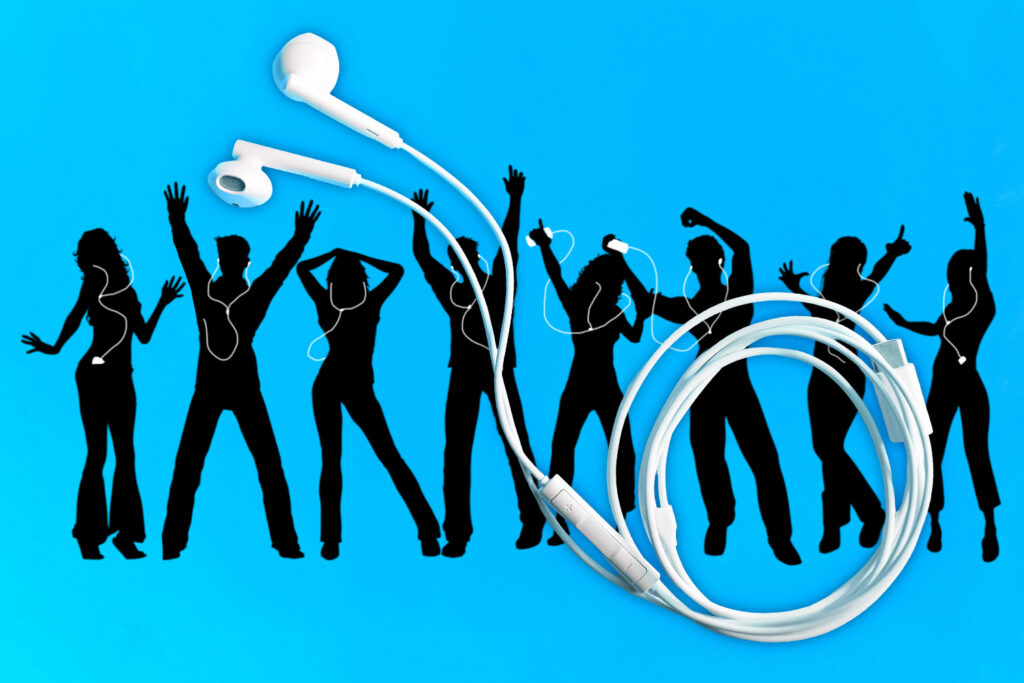
Apple-like dancers and some wired headphones

Wired headphones are making a comeback. Apparently. This isn’t a ‘year of the Linux desktop’ thing either, because an increasing number of people are embracing the cable once again. I’ve never stopped, and so I wrote about why for Stuff: I love my AirPods but I’m glad wired headphones are making a comeback – here’s why.

Apple and gaming, sitting in a tree. At least, that’s how the company would have it, having made yet another push for gaming last week. I thought this effort was more laudable than most, since it was Apple’s (first? only?) Indie Games Week, highlighting a bunch of new titles. I covered the event for Stuff, including an interview with Hello Games MD Sean Murray, in No Man’s Sky finally prepares to land on iPhone.

There are 299 reasons to not buy the new Apple TV 4K. That’s the main thrust of my column about Apple’s revamped black box. The price hike this device has seen over the past year has been eye-watering, and the updates aren’t nearly enough. Still, if you do grab one, here are the 25 best Apple TV apps you’ll actually use.

Apple HomeView left me baffled. I quite like the idea of it but have barely any meaningful use for one. So I mulled that Apple’s smart display looking like the lovechild of my favourite Mac and an Apple Watch isn’t nearly enough for me to buy one while also grumbling that Apple’s wall-mounted HomeView costs the same as the regular one, despite missing its bottom half.

There are now many, many iPhones. Because my editor made me, I updated my list of every iPhone ranked in order of greatness, which has never been controversial at all, along with my roundup of the current best iPhones.

Fed up with iPhone photos not syncing? Missed the chance to do a syncing feeling pun? No worries. Check out my latest for Amateur Photographer, which explores the annoying reason why your iPhone photos don’t always sync – and how to fix it (for a while, at least).

AI is making mush of people’s brains. At the very least, there’s a compelling argument that people are starting to lose their critical thinking capabilities. From The Guardian’s Companies rushed in on AI. Now some are pulling back by Taylor Telford:

At Microsoft, which rolled out AI widely internally, executive vice-president Ryan Roslansky recently publicly lamented the prevalence of AI slop in his day-to-day work. After receiving “what was clearly an AI-generated doc” from a co-worker, he used his AI to summarize it and came away with no new thinking about the idea, he said. He warned his followers against falling into this potential “doom loop”, where AI does the reading and writing and leaves behind an “ocean of sameness”.

I had to read that more than once, because it’s such an amazing and staggering paragraph. I love the bit where it says the Microsoft guy used AI to summarise AI slop (thereby creating, what, slopception?) and – shock! – got no new ideas (having not used his own brain) and was terribly angry about the whole thing. His conclusion is about right. His actions were the problem.

October 20, 2026. Read more in: Weeknotes

2 Comments

« older posts